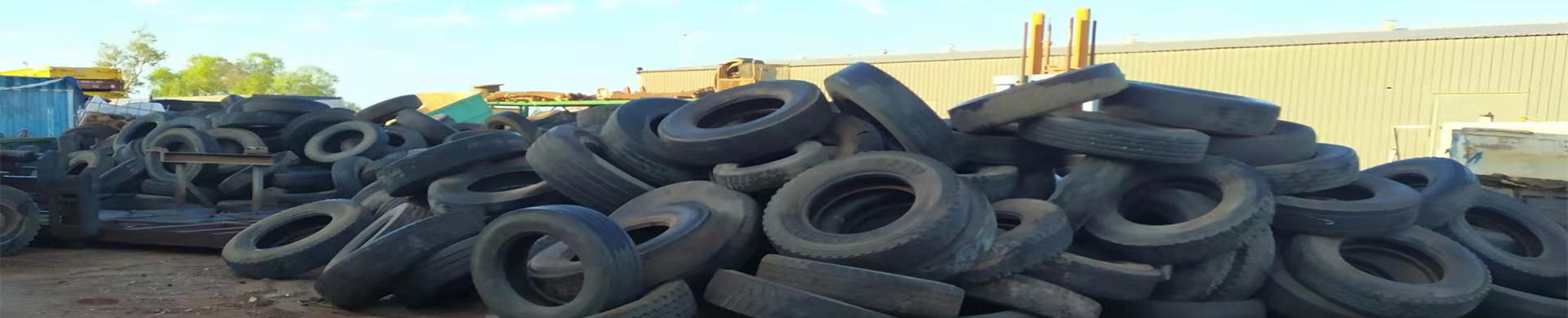

A tire recycling business is profitable when it is planned around reliable scrap-tire feedstock and pre-sold output, not around the machine first. A complete crumb-rubber line typically costs USD 200,000–600,000 and can reach payback in 12–24 months by selling crumb rubber and recovered steel wire plus charging tipping fees. The essential equipment is a wire debeader, a double-shaft tire shredder, a granulator with magnetic and fiber separation, and a screening & dust-control system — exactly the process line Optima supplies to tire recyclers worldwide.
Is a tire recycling business profitable?
Yes — when scale matches feedstock. A 1,000 kg/h crumb-rubber operation typically grosses USD 300,000–600,000 per year at 40–60% margins. Revenue comes from four streams:
Tipping / acceptance fees — charge USD 0.50–3.00 per passenger tire to take scrap off collectors' hands; this alone can cover 30–50% of operating cost.
Crumb rubber sales — USD 120–600/ton depending on particle size and purity.
Recovered steel wire — USD 100–200/ton as clean scrap.
Textile fiber — sold into fuel and composite markets.
The businesses that succeed are planned backward: buyers first, feedstock second, permits third, equipment last.
How much does a tire recycling plant cost?
Equipment cost scales with throughput and end product. The table below reflects common industry benchmarks independent of any single supplier:
| Model | Throughput | End product | Equipment cost (benchmark) |
|---|---|---|---|
| TDF / chip line | 0.5–2 t/h | Shredded chips for fuel | USD 80,000–200,000 |
| Crumb rubber line | 1–3 t/h | 1–6 mm granules | USD 200,000–600,000 |
| Fine powder line | 0.5–2 t/h | 20–120 mesh powder | USD 400,000–1,000,000+ |
Add 10–15% for installation & commissioning, plus facility, permitting, and 6–12 months working capital.
What equipment do you need? (Project configuration)
A standard crumb-rubber line from Optima is configured around the target product:
Wire debeader — pulls the high-tensile steel bead before shredding.
Double-shaft shredder — tears whole tires into 50–100 mm chips (high torque, tolerates steel).
Granulator / rasper — grinds chips to 1–6 mm granules.
Magnetic separator — removes steel wire; fiber separator — removes textile.
Screening & dust collection — controls particle size and captures dust (≥99% capture).
Production capacity options
| Tier | Capacity | Space needed | Best for |
|---|---|---|---|
| Small / startup | 0.5–1 t/h | 500–800 m² | First-time operators, regional collection |
| Medium | 1–3 t/h | 1,000–1,500 m² | Regional crumb-rubber supply |
| Large / industrial | 3+ t/h | 2,000 m²+ | Export-grade powder, asphalt markets |
Common installation problems
Undersized power supply — tire lines draw 30–200 kW; confirm the high-voltage drop before delivery.
Poor material flow layout — plan receiving → debeading → shredding → granulation → separation → screening → storage in a straight line to avoid double handling.
Weak dust extraction — without enclosed capture, dust reduces sorting accuracy and fails environmental inspection.
Unlevel foundation — shredders need a reinforced concrete base; vibration cracks cause misalignment.
Actual procurement problems buyers face
Buying capacity you cannot feed — a 3 t/h line is waste if daily tire intake is under 2,000 passenger tires.
Wet vs dry process — dry (air/electrostatic) separation needs no wastewater treatment; wet lines add a water-treatment cost most buyers overlook.
Steel-wire contamination — cheap lines dull blades fast; budget wear-resistant blades (D2/DC53).
After-sales problems
Long blade lead time — stock 1–2 sets of spare cutter shafts; Optima ships wear parts from its blade workshop.
Commissioning gaps — insist on on-site installation + operator training, not just a manual.
Spare-parts compatibility — standardize on one supplier so sieves and blades stay interchangeable.
Equipment maintenance experience
Tire lines run in harsh conditions — abrasive rubber plus embedded steel wears blades 2–3× faster than plastic shredding. A disciplined plan prevents downtime:
Daily: inspect shredder blades for chipping, clear jams, check hydraulic oil.
Weekly: verify magnetic strength, conveyor tension, granulator screen wear.
Monthly: lubricate bearings, check motor temperature, shaft seals.
Every 500–1,000 h: rotate or replace shredder blades; budget USD 5,000–15,000/yr for a mid-size line.
Project case
Optima supplied a waste-tyre recycling plant with a rubber-crumb machine to an overseas operator processing passenger and truck tires into granules for local molded-rubber and asphalt markets. The line combined a double-shaft shredder, granulator, magnetic and fiber separation, and enclosed dust collection, commissioned with on-site training.
Customer countries
As a 15+ year manufacturer and exporter, Optima serves international markets across Asia, Europe, the Americas, Africa, and Oceania. Documented installations include a copper-recycling line in New Zealand and multiple tire-recycling plants delivered to overseas buyers.
Frequently asked questions
How many tires per day do I need to be viable?
As a floor, ~2,000–3,000 passenger tires/day of reliable intake justifies a Tier-1 TDF or crumb line; below that, start as a collector/hauler and process later.
What permits does a tire recycling plant need?
Typically a state/provincial scrap-tire processor & storage permit, zoning approval, stormwater and air/noise clearance, and a financial-assurance bond — allow 3–9 months.
What is the payback period?
8–24 months depending on configuration, tipping fees, and local rubber/steel prices.